Women’s Dress Stores
Finding the right dress can completely change the way you look and feel. Whether you are searching for an elegant outfit for a wedding, a comfortable dress for everyday wear, a stylish office outfit, or something special for a party, women’s dress stores offer an enormous variety of choices for every occasion, personal style, and budget.
With so many styles, fabrics, fits, colors, and shopping options available today, choosing the right store can sometimes feel overwhelming. Some stores specialize in affordable everyday fashion, while others focus on premium designer clothing, occasion wear, sustainable fashion, or custom-made dresses.
This guide will help you understand what to look for when shopping at women’s dress stores, how to choose the right style for different occasions, how to select the right fit, and how to make smarter purchasing decisions.

What Are Women’s Dress Stores?
Women’s dress stores are retail shops or online dress stores that specialize in clothing designed for women. Depending on the store, you may find casual dresses, formal dresses, party wear, wedding guest dresses, maxi dresses, midi dresses, office dresses, summer dresses, traditional outfits, designer collections, and more.
A good women’s dress stores usually offers different sizes, styles, fabrics, colors, and price ranges so shoppers can find clothing that matches their individual requirements.
Women’s dress stores can generally be divided into several categories:
- Local fashion boutiques
- Department stores
- Online fashion dress stores
- Designer boutiques
- Occasion-dress stores
- Affordable fashion retailers
- Sustainable dress stores
- Custom tailoring and made-to-measure boutiques
- Ethnic and traditional dress stores
- Luxury fashion dress stores
Each type has its own advantages. A local boutique may provide personalized assistance, while an online store may offer a much larger selection. Designer boutiques can be ideal for special occasions, while affordable retailers may be better suited to building an everyday wardrobe.
Why Choosing the Right Women’s Dress Store Matters
The store you choose can make a significant difference in your shopping experience.
A reliable store should provide clear product information, accurate sizing, quality photographs, transparent pricing, and reasonable return or exchange policies. For physical stores, helpful staff and well-organized collections can make it easier to find something suitable.
The right store should also offer clothing that matches your lifestyle rather than simply following every fashion trend.
For example, someone looking for comfortable workwear may prefer structured midi dresses and simple colors. Someone attending a wedding may want embellished dresses, elegant silhouettes, or traditional-inspired designs.
Instead of choosing a store simply because it is popular, consider whether its collection actually matches your needs.
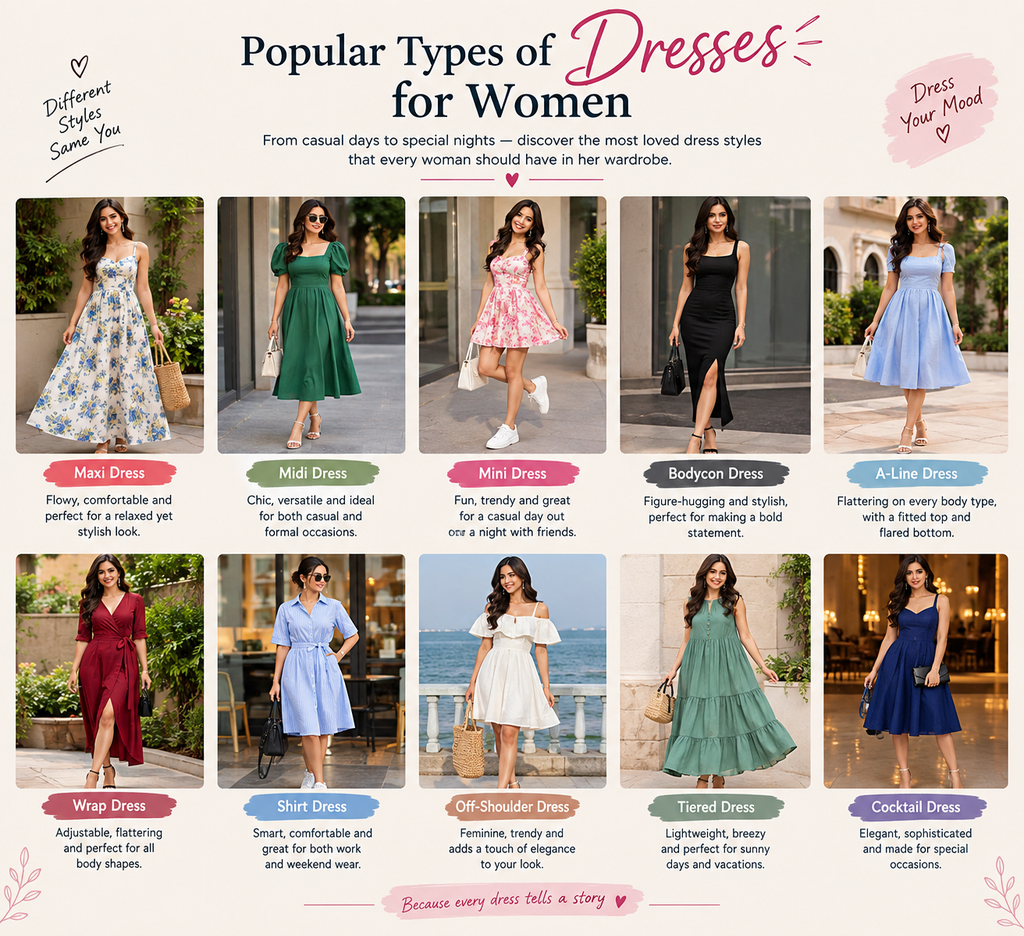
Popular Types of Dresses for Women dress stores
1. Maxi Dresses
Maxi dress stores are long dresses that generally reach the ankles or floor. They are popular because they can be both comfortable and elegant.
Flowy maxi dresses are particularly suitable for vacations, summer outings, casual gatherings, and relaxed occasions. More structured or embellished maxi dresses can work beautifully for evening events.
2. Midi Dresses
Midi dresses typically fall somewhere between the knee and ankle. They are versatile enough for work, brunches, dinners, celebrations, and semi-formal occasions.
A simple midi dress can become a wardrobe staple because it can be styled differently with shoes, jackets, handbags, and accessories.
3. Mini Dresses
Mini dresses usually fall above the knee and are often chosen for parties, casual outings, vacations, and evening occasions.
The overall appearance depends heavily on the fabric and cut. A simple cotton mini dress can look casual, while a fitted satin or embellished version can create a more glamorous look.
4. Wrap Dresses
Wrap dresses feature overlapping fabric that wraps around the body and is usually secured with a tie or fastening.
They are popular because the adjustable waist can provide a comfortable and flattering fit. Wrap dresses can be suitable for work, casual occasions, dinners, and social events.
5. Shirt Dresses
Shirt dresses combine elements of a traditional shirt with the silhouette of a dress. They can create a polished yet relaxed appearance.
Pairing a shirt dress with loafers or flats can create an effortless daytime outfit, while heels and statement accessories can make the same dress suitable for an evening setting.
6. Bodycon Dresses
Bodycon dresses are designed to closely follow the body’s shape. They are commonly worn for parties, dinners, celebrations, and nightlife.
Because the dress is fitted, choosing the correct size and fabric is especially important for comfort.
7. A-Line Dresses
A-line dresses are fitted around the upper body and gradually widen toward the hem.
This classic silhouette has remained popular because it works well across many occasions and can be styled in both casual and formal ways.
8. Fit-and-Flare Dresses
Fit-and-flare dresses are fitted around the bodice and become wider below the waist.
They are popular for parties, dates, celebrations, and semi-formal events and can provide a feminine, playful appearance.
9. Slip Dresses
Slip dresses usually feature thin straps and a simple, flowing silhouette. Satin and silk-inspired fabrics are particularly common.
They can be worn alone during warmer weather or layered with jackets, sweaters, shirts, or blazers.
10. Kaftan and Flowy Dresses
Flowy kaftan-style dresses are particularly useful for relaxed occasions and vacations. They offer comfort and freedom of movement while still looking stylish.
How to Choose the Right Dress
Choosing a dress is about more than selecting a beautiful design. The best choice should suit the occasion, your comfort level, preferred fit, and personal style.
Consider the Occasion
Start by asking where you plan to wear the dress.
A formal business meeting requires a different style from a beach vacation. Similarly, a wedding guest outfit will usually require a different level of formality than a casual weekend dress.
Think about:
- The location
- Time of day
- Weather
- Dress code
- Expected level of formality
- How long you will be wearing the outfit
This simple checklist can prevent many common shopping mistakes.
Pay Attention to Fabric
Fabric affects how a dress looks, feels, and performs.
Cotton is popular for casual clothing because it is generally comfortable and breathable. Linen is another excellent choice for warm weather, although it naturally wrinkles.
Chiffon and georgette are often used for elegant and occasion-focused clothing. Satin can provide a smooth, polished appearance, while velvet is often associated with colder weather and evening fashion.
When shopping online, carefully read the fabric composition instead of relying only on product photographs.
Check the Size Guide
Sizing can vary considerably between stores and brands.
Do not assume that the same size will fit identically everywhere. Before ordering online, compare your measurements with the store’s size chart.
Useful measurements may include:
- Bust
- Waist
- Hip
- Shoulder
- Dress length
If you are between sizes, check the store’s guidance on whether the garment has stretch and whether the fit is designed to be relaxed or fitted.
Think About Comfort
A dress can look beautiful and still be impractical if you cannot move comfortably in it.
Consider whether you will be sitting, walking, dancing, traveling, or standing for long periods. Check the neckline, sleeves, waistband, fabric, and overall construction.
For everyday wear, comfort should be one of the most important factors.
Shopping at Local Women’s Dress Stores
Local dress stores offer an experience that online shopping cannot always reproduce.
One of the biggest advantages is the opportunity to see and feel the fabric before purchasing. You can also try different sizes, compare colors under actual lighting, and ask staff for styling suggestions.
Local boutiques may also carry unique pieces that are not widely available elsewhere.
When visiting a physical store, take your time. Rather than immediately choosing the first dress you like, compare several silhouettes and fabrics.
If possible, try the dress while wearing the type of undergarments and shoes you expect to use with it.

Shopping for Women’s Dresses Online
Online women’s dress stores have made fashion shopping considerably more convenient.
You can browse hundreds or thousands of options without visiting multiple physical locations. Online shopping is particularly useful when searching for a specific color, size, design, or price range.
However, online shoppers should pay close attention to product details.
Before purchasing, check:
- Size chart
- Material composition
- Product measurements
- Customer reviews
- Product photographs
- Delivery information
- Return and exchange policy
- Care instructions
- Estimated delivery date
Reviews can be particularly helpful when they include information about fit, fabric quality, color accuracy, and sizing.
How to Find the Best Women’s Dress Stores Near You
If you prefer shopping in person, searching for women’s dress stores near your location can help you discover local boutiques and fashion retailers.
Start by identifying what you actually need.
Instead of searching only for “women’s dress stores,” try more specific searches such as:
- Women’s party dress stores
- Women’s formal dress stores
- Women’s casual dress stores
- Women’s ethnic dress stores
- Women’s designer boutiques
- Affordable women’s clothing stores
- Women’s dresses for weddings dress stores
- Women’s office wear dress stores
Specific searches can help narrow the results and make your shopping trip more productive.
Before visiting a store, check its current opening hours, available collections, customer reviews, and whether it carries your preferred size range.
Choosing Dresses for Different Occasions
Dresses for Office Wear
Office dresses should generally balance professionalism and comfort.
Popular choices include:
- Structured midi dresses
- Shirt dresses
- A-line dresses
- Simple wrap dresses
- Minimalist sheath dresses
Neutral shades such as black, navy, beige, white, grey, and muted colors can create a polished appearance.
Avoid choosing a dress solely because it is fashionable. Consider whether it fits your workplace environment and allows you to move comfortably throughout the day.
Dresses for Weddings
Wedding guest dresses provide more freedom for color, texture, and accessories.
Depending on the event, you might choose:
- Elegant maxi dresses
- Embellished dresses
- Satin dresses
- Chiffon dresses
- Floral dresses
- Traditional-inspired designs
- Sophisticated midi dresses
Consider the venue and time of day before deciding on the final outfit.
Dresses for Parties
Party dresses can be more expressive and glamorous.
Sequins, metallic fabrics, satin, velvet, interesting necklines, statement sleeves, and bold colors can all create an eye-catching look.
However, balance is important. If the dress is heavily embellished, simple accessories may work better.
Casual Dresses
Casual dresses are designed for everyday comfort.
Cotton dresses, shirt dresses, relaxed midi dresses, denim dresses, and simple printed styles can be useful additions to a casual wardrobe.
These dresses can often be styled with sneakers, sandals, flats, or casual handbags.
Summer Dresses
For warm weather, look for lightweight and breathable materials.
Cotton, linen, lightweight viscose, and similar fabrics can be comfortable choices depending on the garment construction.
Loose silhouettes, shorter sleeves, and lighter colors can also make summer outfits feel more comfortable.
Winter Dresses
During colder weather, consider dresses made from thicker materials such as wool blends, knit fabrics, velvet, or other insulating materials.
Layering can also transform a summer or transitional dress into a winter outfit.
Try pairing dresses with:
- Long coats
- Blazers
- Cardigans
- Tights
- Boots
- Scarves
Building a Versatile Dress Collection
You do not need dozens of dresses to create a useful wardrobe.
A carefully selected collection can cover many occasions.
Consider starting with:
- A simple black dress
- A comfortable casual dress
- A versatile midi dress
- A professional office dress
- An elegant occasion dress
- A printed summer dress
- A special-event dress
- A comfortable maxi dress
These basic categories can be styled differently with accessories and footwear.
For example, one neutral midi dress can be worn with flats and a tote bag for work, sneakers and a crossbody bag for a casual outing, or heels and jewelry for dinner.

Choosing the Right Color
Color can significantly influence the overall appearance of a dress.
Neutral colors are easy to combine with other wardrobe pieces. Black, white, beige, navy, grey, brown, and cream are particularly versatile.
Bright colors can create a stronger statement. Red, emerald green, cobalt blue, pink, orange, and yellow can make an outfit more noticeable.
Pastel colors can create a softer appearance and are often popular during spring and summer.
Rather than following every color trend, consider which colors you naturally enjoy wearing and which shades work well with the rest of your wardrobe.
Understanding Dress Fit
The right fit can make even a simple dress look polished.
Look at the shoulder seams, bust area, waist, hips, and hemline.
A dress may be too small if:
- Fabric pulls across the body
- Seams feel uncomfortable
- Buttons gape
- Movement is restricted
A dress may be too large if:
- Shoulder seams sit too far down
- Excess fabric creates unnecessary bulk
- The waist does not sit correctly
- The neckline does not remain in place
Remember that fit preferences are personal. Some people prefer relaxed silhouettes, while others prefer fitted clothing.
The best dress is one that makes you feel comfortable and confident.
Accessories for Women’s Dresses
Accessories can completely change the appearance of a dress.
A simple dress can become more formal with:
- Statement earrings
- Heels
- A structured handbag
- A belt
- Layered necklaces
For a casual look, consider:
- Sneakers
- Flat sandals
- Crossbody bags
- Minimal jewelry
- Casual jackets
The goal is not to use as many accessories as possible. Instead, choose pieces that complement the dress.
Shoes to Wear With Different Dresses
Footwear plays an important role in completing an outfit.
Heels can create a sophisticated appearance with formal and evening dresses.
Flats are excellent for everyday wear and situations where comfort is important.
Sneakers can create a modern casual look, particularly with shirt dresses, midi dresses, and relaxed styles.
Ankle boots work well with many autumn and winter dresses.
Sandals are a natural choice for warm-weather outfits.
When selecting shoes, consider both appearance and how long you expect to wear them.
How to Shop on a Budget
You do not need to spend a large amount of money to build a stylish dress collection.
Start by deciding your budget before shopping. This makes it easier to avoid impulse purchases.
Look for dresses that can be worn in multiple ways. A versatile dress may provide better value than a highly specific occasion outfit that you will only wear once.
You can also consider seasonal sales, outlet collections, end-of-season discounts, and promotional offers.
However, a low price should not automatically determine your purchase. Consider fabric quality, stitching, fit, durability, and how often you are likely to wear the item.
A slightly more expensive dress that remains useful for years may provide better value than several inexpensive pieces that quickly lose their shape.
Sustainable Shopping Choices
More shoppers are becoming interested in clothing that is made thoughtfully and intended to last.
When purchasing a dress, consider its expected lifespan.
Ask yourself:
- Will I wear this regularly?
- Is the material durable?
- Can I care for it easily?
- Does the design work beyond one season?
- Can it be styled in multiple ways?
Buying fewer, better-used pieces can help create a more practical wardrobe.
You can also explore second-hand clothing, vintage stores, clothing exchanges, and resale platforms if they suit your preferences.
What to Look for in a Reliable Women’s Dress Store
A trustworthy store should make shopping straightforward.
Look for:
Clear Product Information
Product pages should provide useful details about fabric, size, color, fit, and care.
Accurate Images
Photographs should show the dress from multiple angles when possible.
Transparent Pricing
The listed price should be clear, including information about discounts or additional charges.
Reasonable Return Policies
Always understand the return or exchange conditions before making a purchase, particularly when shopping online.
Helpful Customer Service
Questions about sizing, materials, delivery, or returns should receive clear answers.
Consistent Quality
A good store should maintain reasonable consistency in construction and product descriptions.
Common Mistakes to Avoid When Buying Dresses
Buying Only Because Something Is Trending
Fashion trends can be fun, but trends should not replace personal style.
Choose clothing that you genuinely enjoy wearing.
Ignoring Measurements
This is one of the most common mistakes when shopping online.
Always compare your measurements with the store’s size chart.
Choosing Appearance Over Comfort
If a dress looks great but is uncomfortable, you may rarely wear it.
Forgetting the Occasion
A dress that works beautifully for a beach holiday may not be suitable for a formal office event.
Not Checking the Return Policy
Always understand whether the item can be returned, exchanged, or refunded.
Buying Too Many Similar Dresses
Before purchasing, check your existing wardrobe. You may already own several dresses with nearly identical colors or silhouettes.
Questions to Ask Before Buying a Dress
Before completing your purchase, ask yourself:
Where will I wear it?
If you cannot identify at least one realistic occasion, consider whether you really need it.
Does it fit properly?
Check the size chart and measurements rather than relying on assumptions.
Is the fabric suitable?
Think about the season, weather, and expected comfort.
Can I style it in different ways?
Versatility can make a dress more valuable.
Does it suit my existing wardrobe?
A dress that works with shoes, bags, jackets, and accessories you already own can be easier to wear.
Will I still like it after the trend disappears?
Classic pieces often remain useful for much longer.
How to Care for Your Dresses
Proper care can extend the life of your clothing.
Always follow the care label instructions. Some fabrics can be machine washed, while others require hand washing or professional cleaning.
Avoid unnecessarily washing delicate clothing too frequently.
Store dresses properly using suitable hangers or folded storage depending on the fabric. Keep delicate materials away from excessive moisture and direct sunlight.
For dresses with embellishments, lace, sequins, or delicate embroidery, extra care may be necessary.
Proper storage is particularly important for special-occasion dresses that may remain unused for long periods.
Why Personal Style Matters More Than Trends
Fashion is constantly changing, but personal style is more enduring.
The most stylish wardrobe is not necessarily the one filled with the newest trends. It is the one that reflects your personality and makes you feel comfortable.
Some women prefer minimalist dresses in neutral colors. Others love bright prints, dramatic silhouettes, embroidery, or statement designs.
There is no single definition of the perfect dress.
Your ideal women’s dress stores should help you discover clothing that fits your lifestyle, personality, budget, and occasions.
Final Guide to Choosing Women’s Dress Stores
The best women’s dress stores are not simply the ones with the largest selection. They are the stores that make it easier to find clothing that genuinely works for you.
Before buying, consider the occasion, fabric, fit, sizing, price, quality, comfort, and styling possibilities. Whether you shop at a local boutique, department store, designer showroom, or online fashion retailer, taking a few extra minutes to research the product can lead to much better purchases.
If you are searching for women’s dress stores near you, begin with the type of clothing you actually need. A specific search for formal dresses, casual dresses, party wear, office dresses, wedding guest dresses, or designer clothing can help you find more relevant options.
Most importantly, choose dresses that you will actually enjoy wearing. A beautiful dress is valuable when it fits comfortably, suits the occasion, complements your personal style, and remains useful beyond a single event.
With the right approach, finding the perfect dress becomes less about chasing trends and more about creating a wardrobe that makes everyday dressing easier, more enjoyable, and more personal.